


What Is a Cybersecurity Strategy and Why Does It Matter?
In today’s digital environment, businesses depend on technology, cloud platforms, networks, applications, and data to operate efficiently. As digital systems become more connected, the risk of cyberattacks also increases. Organizations need a structured approach to protect their systems, information, employees, and customers from security threats.
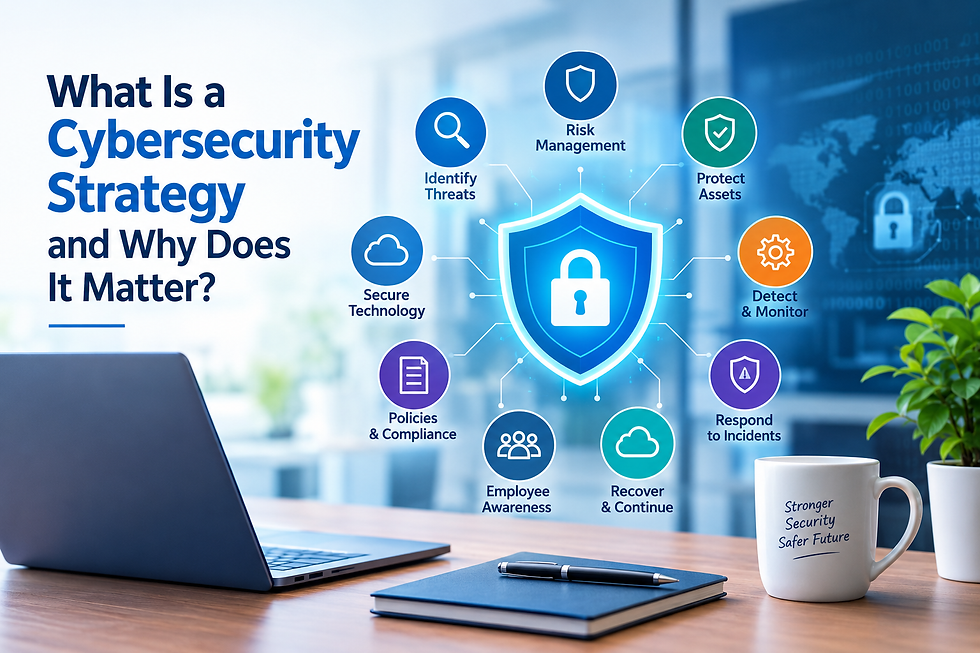
What Is a Cybersecurity Strategy? It is a planned approach that helps an organization identify cybersecurity risks, protect digital assets, detect threats, respond to incidents, and recover from security problems. Rather than relying on individual security tools, a cybersecurity strategy brings people, processes, and technologies together to create a stronger security framework.
What Is a Cybersecurity Strategy?
A cybersecurity strategy is a long-term plan designed to protect an organization’s digital assets from cyber threats. It defines how security risks will be identified, managed, monitored, and addressed.
A cybersecurity strategy can cover areas such as:
Network and infrastructure security
Data protection
Identity and access management
Employee security awareness
Cloud security
Application security
Incident response
Risk management
Security monitoring
Disaster recovery
The exact strategy depends on an organization’s size, industry, technology environment, data, and potential risks.
Why Is a Cybersecurity Strategy Important?
Cyber threats can affect organizations of every size. Attackers may target sensitive information, financial systems, customer data, employee accounts, or business operations.
A cybersecurity strategy helps organizations prepare for these risks instead of reacting only after an incident occurs. It provides a structured way to understand vulnerabilities and establish security controls.
An effective strategy can help reduce the likelihood and impact of security incidents while supporting business continuity and protecting valuable digital resources.
Key Goals of a Cybersecurity Strategy
A cybersecurity strategy generally focuses on several important goals. These goals help organizations create a security environment that can respond to changing threats.
Protect Digital Assets
Businesses store valuable information in databases, applications, cloud services, computers, and other systems. A cybersecurity strategy establishes controls to protect these assets from unauthorized access, theft, or damage.
Identify Security Risks
Risk identification is an important part of cybersecurity planning. Organizations need to understand which systems, applications, accounts, and data could be vulnerable to attacks.
Detect Threats Early
Continuous monitoring can help identify unusual activity, unauthorized access attempts, malware, and other potential threats. Early detection can allow security teams to investigate problems before they become more serious.
Respond to Security Incidents
No organization can assume that it will never experience a security incident. A cybersecurity strategy should include an incident response plan that defines what employees and security teams should do when an attack occurs.
Support Recovery
Recovery focuses on restoring systems and business operations after a security incident. Backups, disaster recovery procedures, and business continuity plans can help organizations return to normal operations.
Main Components of a Cybersecurity Strategy
A strong cybersecurity strategy usually includes multiple security areas rather than depending on one technology.
Risk Assessment
Risk assessments help organizations identify potential threats, vulnerabilities, and business impacts. Regular assessments can also reveal new risks as technologies and business processes change.
Access Control
Access control determines who can access systems and information. Organizations can use strong passwords, multi-factor authentication, role-based access, and other controls to limit unnecessary access.
Data Security
Data security focuses on protecting information throughout its lifecycle. Encryption, access controls, secure backups, and data classification can help protect sensitive information.
Network Security
Network security helps protect communication systems and connected devices from unauthorized activity. Firewalls, network monitoring, segmentation, and secure configurations can form part of this approach.
Endpoint Security
Laptops, desktops, smartphones, and other devices can become entry points for attackers. Endpoint security controls can help detect malware, unauthorized activity, and other threats.
Employee Awareness
Employees play an important role in cybersecurity. Security awareness training can help people recognize phishing messages, suspicious links, social engineering attempts, and unsafe online behavior.
Incident Response
An incident response plan establishes procedures for identifying, containing, investigating, and recovering from cybersecurity incidents. Clear responsibilities can help reduce confusion during an emergency.
How Does a Cybersecurity Strategy Work?
A cybersecurity strategy works as a continuous process rather than a one-time project. Organizations first identify their assets and risks, then establish security controls based on those risks.
Security teams monitor systems and review security events to identify potential problems. When an incident occurs, the organization follows its response procedures to contain the threat and restore affected systems.
After an incident or security review, organizations can analyze what happened and improve their controls. This continuous cycle helps cybersecurity strategies adapt to new technologies, vulnerabilities, and attack methods.
Benefits of Having a Cybersecurity Strategy
A well-planned cybersecurity strategy can provide several benefits for organizations.
Reduces Security Risks
Identifying vulnerabilities and implementing appropriate controls can reduce exposure to common cybersecurity threats.
Protects Sensitive Information
Security controls help protect customer, employee, financial, and business information from unauthorized access.
Improves Incident Preparedness
Organizations with documented response procedures can react more systematically when security incidents occur.
Supports Business Continuity
Cyber incidents can interrupt business operations. Recovery planning and reliable backups can help organizations restore important services.
Builds Customer Trust
Customers expect organizations to protect their information. Strong cybersecurity practices can support confidence in digital services.
Supports Regulatory Requirements
Depending on the industry and location, organizations may have legal or regulatory obligations related to data protection and cybersecurity. A structured security program can help organizations manage these responsibilities.
Cybersecurity Strategy vs. Cybersecurity Policy
A cybersecurity strategy and cybersecurity policy are related but different.
A cybersecurity strategy provides the overall direction for managing security risks. It considers business objectives, risks, technologies, resources, and long-term security priorities.
A cybersecurity policy provides specific rules and requirements that employees and other users are expected to follow. For example, an organization may have policies covering passwords, acceptable technology use, remote access, or data handling.
In simple terms, the strategy explains the broader security approach, while policies establish specific rules and expectations.
How to Build a Cybersecurity Strategy
Organizations can follow a structured process when developing their cybersecurity strategy.
1. Identify Important Assets: Determine which systems, applications, devices, and data require protection.
2. Assess Risks: Identify possible threats and vulnerabilities and evaluate their potential impact.
3. Establish Security Objectives: Define clear cybersecurity goals based on business requirements.
4. Implement Security Controls: Use appropriate technologies, processes, and access controls to manage identified risks.
5. Train Employees: Provide regular cybersecurity awareness and security training.
6. Monitor Systems: Continuously review systems and security events for suspicious activity.
7. Prepare an Incident Response Plan: Establish clear procedures for handling security incidents.
8. Review and Improve: Regularly evaluate the strategy and update it as business needs and threats change.
Common Challenges in Cybersecurity Strategy
Developing a cybersecurity strategy can present several challenges. Organizations may have limited budgets, outdated technology, insufficient security expertise, or complex IT environments.
The growing use of cloud services, remote work, mobile devices, and third-party applications can also increase the number of systems that need protection.
Another challenge is keeping security practices updated. Cyber threats continue to evolve, so organizations need to regularly review their risks, technologies, employee awareness, and response procedures.
The Role of Employees in Cybersecurity
Technology alone cannot create a complete cybersecurity strategy. Employees also play an important role in protecting organizational systems.
A single compromised account can potentially provide attackers with access to important resources. Security awareness programs can teach employees how to identify suspicious emails, protect credentials, use secure devices, and report potential incidents.
Creating a security-conscious workplace helps make cybersecurity part of everyday business activities rather than treating it only as an IT responsibility.
Conclusion:
Understanding What Is a Cybersecurity Strategy is important for organizations that rely on digital systems and data. A cybersecurity strategy provides a structured approach to identifying risks, protecting assets, detecting threats, responding to incidents, and recovering from security problems.
An effective strategy combines technology, processes, employee awareness, risk management, monitoring, and incident response. Because cyber threats and business environments continue to change, cybersecurity strategies should also be reviewed and improved regularly.
By taking a proactive and organized approach to security, organizations can strengthen their defenses, protect important information, support business continuity, and prepare for emerging cybersecurity challenges.
Frequently Asked Questions
What Is a Cybersecurity Strategy in Simple Terms?
A cybersecurity strategy is a plan for protecting an organization’s systems, networks, applications, devices, and data from cyber threats. It also explains how the organization will detect, respond to, and recover from security incidents.
Why Does a Cybersecurity Strategy Matter?
It matters because cyber incidents can affect data, systems, finances, operations, and customer trust. A structured strategy helps organizations prepare for security risks and respond to incidents more effectively.
What Are the Main Elements of a Cybersecurity Strategy?
Common elements include risk assessment, access control, data security, network security, endpoint protection, employee awareness, security monitoring, incident response, and recovery planning.
Who Is Responsible for a Cybersecurity Strategy?
Cybersecurity is generally a shared responsibility. Security and IT teams may manage technical controls, while business leaders, employees, and other stakeholders also have responsibilities related to security practices and risk management.
How Often Should a Cybersecurity Strategy Be Reviewed?
There is no single review schedule that applies to every organization. Strategies should be reviewed regularly and whenever there are significant changes to business operations, technology, regulations, or the organization’s risk environment.



Comments