


Future of Data Science: Trends Shaping the Industry
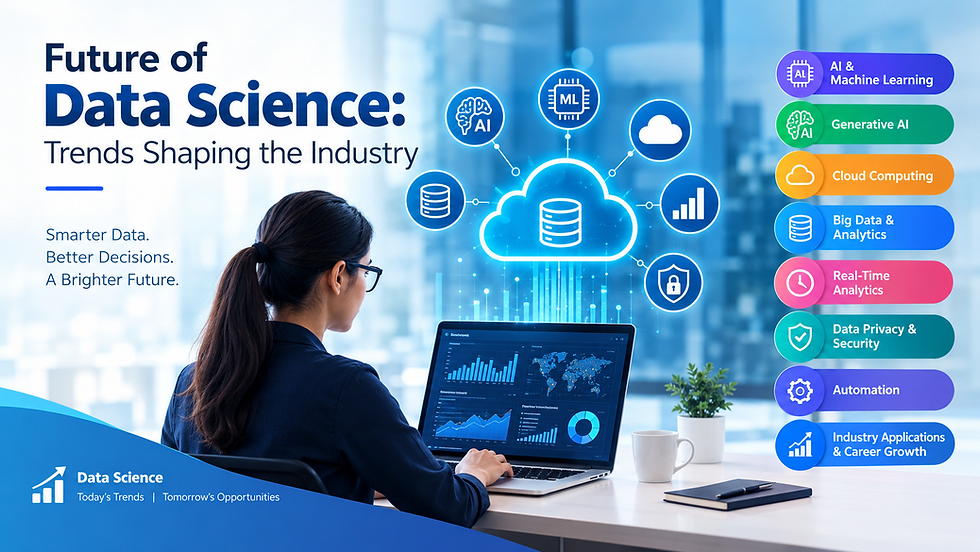
Data science is changing rapidly as businesses generate more data and adopt advanced technologies. From artificial intelligence and machine learning to cloud computing and automation, new developments are transforming how organizations collect, analyze, and use information.
The future of data science will focus on faster decision-making, intelligent automation, real-time analytics, and responsible use of data. Professionals who understand emerging technologies will have strong opportunities across industries. In this article, we explore the key trends shaping data science and how they may influence businesses and careers in the coming years.
What Is the Future of Data Science?
The future of data science will be driven by artificial intelligence, automation, cloud platforms, big data, and real-time analytics. Data scientists will increasingly work with intelligent tools that can process large datasets and identify useful patterns quickly.
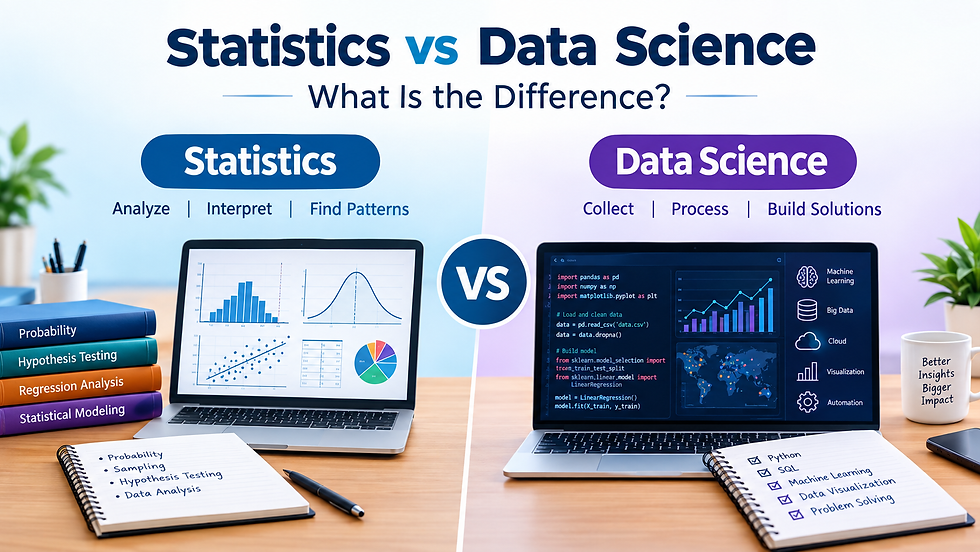
Instead of focusing only on traditional data analysis, professionals will combine statistical knowledge with programming, machine learning, AI, and business understanding. Organizations will also expect data teams to deliver faster and more reliable insights that support strategic decisions.
Artificial Intelligence and Data Science
Artificial intelligence is becoming an important part of modern data science. AI systems can analyze large amounts of information, identify patterns, make predictions, and automate repetitive analytical tasks.
Data scientists can use AI to improve forecasting, recommendation systems, fraud detection, customer analysis, and business intelligence. As AI technology becomes more advanced, data science workflows are expected to become faster and more efficient.
The combination of AI and data science will create new opportunities for businesses that want to make better decisions using their data.
Growth of Generative AI
Generative AI is one of the major trends influencing the future of data science. These systems can generate text, code, images, summaries, and other content based on data and user instructions.
For data professionals, generative AI can help with coding, data exploration, documentation, report creation, and explaining analytical results. It can reduce the time required for repetitive tasks and allow professionals to focus on more complex problems.
However, data scientists will still need to validate AI-generated results and ensure that models produce accurate and responsible outputs.
Automated Machine Learning
Automated Machine Learning, commonly known as AutoML, is making machine learning more accessible. AutoML can automate several steps of the machine learning process, including model selection, feature engineering, and optimization.
This trend can help organizations develop predictive models more efficiently. It also allows professionals with different technical backgrounds to experiment with machine learning.
In the future, data scientists may spend less time performing repetitive model-building tasks and more time understanding business requirements, interpreting results, and improving data strategies.
Real-Time Data Analytics
Businesses increasingly need information immediately rather than waiting for traditional reporting cycles. Real-time analytics helps organizations process and analyze data as it is generated.
Industries such as banking, e-commerce, healthcare, logistics, and telecommunications can use real-time analytics to identify unusual activity, monitor operations, understand customers, and respond to changing conditions.
As businesses become more data-driven, demand for systems capable of processing streaming data will continue to grow. Data scientists will need to understand technologies that support fast and continuous data analysis.
Cloud Computing in Data Science
Cloud computing is becoming an important foundation for modern data science. Cloud platforms provide scalable computing power, storage, databases, and analytical tools without requiring organizations to maintain all infrastructure locally.
One of the major Benefits of Cloud Computing is scalability. Businesses can increase or reduce computing resources according to their data and workload requirements.
Cloud environments can also support collaboration, data storage, machine learning workflows, and large-scale analytics. As datasets continue to grow, cloud computing is expected to remain an important part of the data science ecosystem.
Big Data and Advanced Analytics
The amount of data generated by businesses, devices, applications, and online platforms continues to increase. Big data technologies help organizations store and process information at a large scale.
Data scientists can use advanced analytics to identify patterns across massive datasets and generate actionable insights. Technologies for distributed processing and modern data architectures are making large-scale analytics more practical.
The future will require professionals who understand not only analytical techniques but also how data is collected, stored, processed, and delivered for decision-making.
Data Science in Business Decision-Making
Data science is moving beyond technical departments and becoming an important part of business strategy. Companies use data-driven insights to understand customers, improve operations, forecast demand, manage risks, and identify new opportunities.
Future data scientists will increasingly need business knowledge alongside technical skills. Understanding what a company wants to achieve will be just as important as building a predictive model.
This shift will make data science more valuable because analytical results can directly support strategic and operational decisions.
Edge Computing and Data Science
Edge computing processes data closer to where it is generated rather than sending everything to a centralized location. This approach can be useful for connected devices, industrial systems, smart cities, and Internet of Things applications.
By processing information closer to the source, organizations can reduce delays and support faster responses.
Data scientists may increasingly work with data generated from sensors, machines, vehicles, and other connected devices. This will create new opportunities for real-time machine learning and intelligent systems.
Data Privacy and Security
As organizations collect more information, protecting data becomes increasingly important. Businesses need to ensure that sensitive information is handled securely and responsibly.
Future data science practices will place greater emphasis on privacy, access controls, secure data pipelines, and compliance requirements. Data scientists may need to understand how analytical processes can be designed without unnecessarily exposing sensitive information.
Strong data governance will become an essential part of successful data-driven organizations.
Responsible and Ethical AI
As AI becomes more powerful, responsible development will become increasingly important. Data scientists need to consider issues such as bias, fairness, transparency, privacy, and accountability.
Poor-quality or biased data can influence model results and potentially lead to unfair outcomes. Organizations will therefore need processes for testing and monitoring AI systems.
The future of data science will not only be about building accurate models. It will also involve developing systems that organizations and users can understand, evaluate, and trust.
Data Science Automation
Automation is transforming many parts of the data science lifecycle. Tasks such as data preparation, model monitoring, reporting, and workflow management can increasingly be automated.
Automation allows data professionals to reduce repetitive work and spend more time solving complex problems. It can also improve consistency across analytical processes.
However, human expertise will remain important. Professionals will still need to define problems, evaluate results, select appropriate approaches, and make decisions based on business context.
Role of Data Scientists in the Future
The role of the data scientist is likely to become more strategic. Instead of spending most of their time on manual data preparation or repetitive analysis, professionals may increasingly focus on solving business problems with advanced analytical tools.
Data scientists will work closely with engineers, business teams, AI specialists, and decision-makers. Communication skills will therefore become increasingly valuable.
The most successful professionals will combine technical expertise with business understanding, critical thinking, and the ability to explain complex findings clearly.
Skills Needed for Future Data Scientists
Future data scientists will need a combination of technical and professional skills. Important areas include:
Python and SQL
Statistics and mathematics
Machine learning
Artificial intelligence
Generative AI
Cloud computing
Big data technologies
Data visualization
Data engineering concepts
Business analytics
Communication and problem-solving
Continuous learning will be essential because data science technologies are developing rapidly. Professionals who regularly update their skills can better adapt to changes in the industry.
Industry Applications of Data Science
Data science is already being used across many industries, and its applications are expected to expand.
In finance, it supports fraud detection and risk analysis. In healthcare, it can help analyze medical information and improve forecasting. Retail businesses use data science for recommendations and demand prediction. Manufacturing companies can use analytics for quality control and predictive maintenance.
As organizations collect more data, new applications will continue to emerge across sectors.
Career Opportunities in Data Science
The growing use of AI, analytics, and cloud technologies is creating opportunities for professionals with data-related skills. Potential roles include:
Data Scientist
Data Analyst
Machine Learning Engineer
AI Engineer
Business Intelligence Analyst
Data Engineer
Data Architect
Machine Learning Specialist
Career opportunities can vary by industry, experience, and technical expertise. Building strong fundamentals and gaining practical experience can help professionals prepare for these evolving roles.
Challenges in the Future of Data Science
Despite its opportunities, data science will face several challenges. Organizations may struggle with poor-quality data, privacy concerns, cybersecurity risks, biased models, and a shortage of skilled professionals.
Another challenge is the rapid development of AI tools. Data professionals must continuously learn new technologies while understanding their limitations.
Businesses will also need effective data governance strategies to ensure that data is accurate, secure, accessible, and used responsibly.
How to Prepare for the Future
Professionals can prepare for the future of data science by developing strong fundamentals and continuously learning emerging technologies.
Start with statistics, Python, SQL, and data visualization. Then develop knowledge of machine learning, AI, cloud computing, and big data. Working on practical projects can help strengthen problem-solving abilities.
It is also important to understand business requirements and communicate analytical findings clearly. Combining technical knowledge with business and communication skills can provide a strong foundation for a long-term data science career.
Conclusion:
The future of data science will be shaped by AI, generative AI, automation, cloud computing, big data, real-time analytics, and responsible technology. These trends are changing how businesses collect, process, and use information.
Data science professionals will need to continuously develop their technical and business skills to remain relevant. Organizations that successfully combine high-quality data with modern analytical technologies can gain valuable insights and improve decision-making.
As technology continues to evolve, data science will remain an important part of digital transformation across industries.
Frequently Asked Questions
What is the future of data science?
The future of data science will focus on AI, machine learning, generative AI, automation, cloud computing, real-time analytics, and responsible data use.
Will AI replace data scientists?
AI may automate many repetitive data science tasks, but human expertise will remain important for defining problems, validating results, understanding business requirements, and making strategic decisions.
Is cloud computing important for data science?
Yes. Cloud computing provides scalable infrastructure, storage, computing resources, and analytical tools that can support modern data science workloads.
What skills will future data scientists need?
Future data scientists should develop Python, SQL, statistics, machine learning, AI, cloud computing, data visualization, business understanding, and communication skills.
Why is data science important for businesses?
Data science helps businesses analyze information, identify patterns, forecast outcomes, understand customers, improve operations, and make data-driven decisions.
What are the major trends in data science?
Major trends include generative AI, automated machine learning, real-time analytics, cloud computing, big data, edge computing, data privacy, and responsible AI.



Comments