Career Opportunities After A PhD in AI & Machine Learning


Introduction:
A PhD in AI & Machine Learning opens doors to some of the most advanced, innovative, and high-paying career paths in today’s digital economy. Artificial Intelligence (AI) and Machine Learning (ML) are transforming industries, from healthcare and finance to robotics and cybersecurity. As organizations increasingly rely on intelligent systems, the demand for highly specialized professionals with doctoral-level expertise continues to grow.
Graduates with a PhD in AI & Machine Learning are not limited to academia. They can work in global tech firms, research labs, startups, government agencies, and multinational corporations. This degree provides deep knowledge in algorithms, neural networks, deep learning, data modeling, and AI system design — making PhD holders leaders in innovation and strategy.
Why a PhD in AI & Machine Learning Is Highly Valued in 2026
In 2026, AI is no longer a futuristic concept — it is a core business driver. Companies are investing heavily in AI research, automation, and predictive analytics. A PhD in AI & Machine Learning demonstrates advanced research capability, problem-solving skills, and the ability to develop new AI methodologies rather than just apply existing tools.
Leading companies such as Google, Microsoft, and OpenAI actively recruit PhD graduates for cutting-edge research roles. Doctoral candidates are trained to publish research, innovate algorithms, and solve complex computational challenges — qualities that are critical in competitive AI-driven markets.
Moreover, a PhD enhances credibility, leadership opportunities, and access to senior-level positions. It also provides flexibility to move between academic and industrial research environments.
Academic Careers After a PhD in AI & ML
One of the most traditional yet respected paths after a PhD in AI & Machine Learning is academia. Many graduates pursue careers as university professors, lecturers, or postdoctoral researchers. Academic roles allow professionals to:
Conduct independent AI research
Publish scholarly articles
Guide doctoral students
Secure research grants
Collaborate with global institutions
Top universities like Massachusetts Institute of Technology and Stanford University are known for advanced AI research programs and frequently hire PhD graduates for faculty roles.
Academic careers offer intellectual freedom and the opportunity to shape the future of AI education. However, competition for tenure-track positions can be intense, requiring strong publication records and research impact.
AI Research Scientist Roles in Top Tech Companies
Many graduates with a PhD in AI & Machine Learning choose to work as AI Research Scientists in major tech companies. These roles focus on developing new algorithms, improving deep learning models, and advancing AI technologies.
Companies such as Amazon, Meta, and IBM employ PhD holders to innovate in areas like generative AI, reinforcement learning, and computer vision.
Responsibilities typically include:
Designing novel AI frameworks
Publishing research papers
Collaborating with engineering teams
Building scalable AI solutions
Conducting experiments on large datasets
Research scientist roles often offer high salaries, access to massive computational resources, and opportunities to work on groundbreaking technologies.
Machine Learning Engineer: High-Demand Industry Career
A Machine Learning Engineer is one of the most in-demand roles for those with a PhD in AI & Machine Learning. Unlike research scientists who focus on theoretical innovation, ML engineers apply AI models in real-world systems.
PhD graduates bring deep expertise in neural networks, optimization techniques, and algorithm design, which makes them highly valuable in this role. Key responsibilities include:
Developing scalable ML pipelines
Optimizing AI models for production
Deploying AI applications in cloud environments
Ensuring system performance and accuracy
Industries such as e-commerce, fintech, healthcare, and autonomous vehicles actively seek ML engineers with advanced research backgrounds. The combination of theory and practical application gives PhD holders a competitive advantage.
Data Scientist vs AI Specialist: Career Differences
After completing a PhD in AI & Machine Learning, graduates often evaluate roles such as Data Scientist and AI Specialist. While these careers overlap, there are important distinctions.
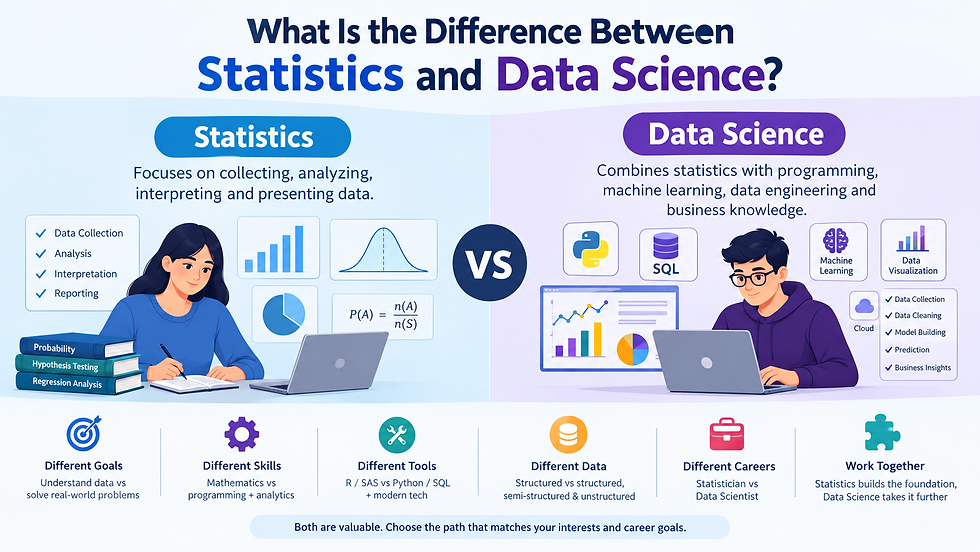
Data Scientists focus on extracting insights from structured and unstructured data. Their work involves statistical modeling, visualization, and predictive analytics.
AI Specialists, on the other hand, design intelligent systems capable of learning and decision-making. They work on advanced deep learning architectures, NLP systems, and computer vision frameworks.
PhD graduates are typically better suited for AI Specialist roles due to their research expertise in algorithm development and model optimization. However, some may choose senior data science roles that require advanced analytical capabilities.
AI Architect and AI Consultant Career Paths
An emerging career opportunity after a PhD in AI & Machine Learning is becoming an AI Architect or AI Consultant.
AI Architect
AI Architects design enterprise-level AI strategies. They determine how AI systems integrate with business operations, cloud platforms, and data infrastructure. This role requires both technical expertise and strategic thinking.
AI Consultant
AI Consultants advise organizations on implementing AI solutions. They analyze business challenges, recommend AI frameworks, and oversee implementation.
PhD holders are highly valued in these roles because they understand the theoretical foundations of AI and can translate complex research into practical solutions. These careers often involve leadership, client interaction, and high earning potential.
Careers in Robotics and Autonomous Systems
Robotics and autonomous systems represent a rapidly growing sector for individuals with a PhD in AI & Machine Learning. These roles involve designing intelligent machines capable of perception, planning, and decision-making.
Companies like Tesla and research divisions within NVIDIA invest heavily in autonomous driving and robotics technologies.
Professionals in this field work on:
Reinforcement learning algorithms
Sensor fusion techniques
Motion planning systems
Human-robot interaction
This career path blends AI theory with hardware integration, offering exciting research and development opportunities in real-world applications.
Opportunities in Natural Language Processing (NLP)
Natural Language Processing (NLP) is one of the most impactful domains within AI. A PhD in AI & Machine Learning specializing in NLP can lead to careers focused on language models, chatbots, and conversational AI systems.
Organizations like OpenAI and Google DeepMind are pioneers in language modeling and generative AI.
Key responsibilities in NLP careers include:
Developing large language models
Building speech recognition systems
Designing sentiment analysis tools
Improving multilingual AI systems
With the rise of AI-powered virtual assistants and generative technologies, NLP specialists are among the most sought-after professionals in the AI job market.
Computer Vision and Deep Learning Career Options
Computer Vision is one of the most dynamic specializations after a PhD in AI & Machine Learning. This field focuses on enabling machines to interpret and understand visual data such as images and videos. With advancements in deep learning, computer vision has expanded into areas like facial recognition, medical imaging, surveillance systems, and augmented reality.
Leading technology companies such as Apple, Meta, and NVIDIA actively recruit PhD graduates to develop image classification systems, object detection models, and real-time visual processing frameworks.
Key roles in this domain include:
Computer Vision Scientist
Deep Learning Researcher
Image Processing Engineer
Autonomous Vision Specialist
These careers combine algorithm design with large-scale model deployment, making them ideal for candidates with strong mathematical and neural network expertise.
AI Roles in Healthcare, Finance, and Cybersecurity
A PhD in AI & Machine Learning opens specialized opportunities across multiple high-impact industries.
Healthcare
AI-driven diagnostics, predictive analytics, and personalized medicine are transforming patient care. Organizations like Mayo Clinic integrate AI models to improve disease detection and treatment planning. PhD holders develop deep learning systems for medical imaging, drug discovery, and genomic analysis.
Finance
In finance, AI powers fraud detection, algorithmic trading, and risk modeling. Companies such as Goldman Sachs use advanced ML models to analyze financial data and automate decision-making processes.
Cybersecurity
AI enhances threat detection and anomaly analysis. Firms like Palo Alto Networks employ AI experts to build systems that detect cyber threats in real time.
These sectors value doctoral-level expertise for building secure, accurate, and scalable AI solutions.
Government and Defense AI Research Jobs
Government agencies and defense organizations increasingly rely on AI technologies for national security, research innovation, and infrastructure development. A PhD in AI & Machine Learning qualifies candidates for advanced research positions in public sector institutions.
In the United States, agencies like Defense Advanced Research Projects Agency (DARPA) and NASA conduct AI research in robotics, autonomous systems, and space exploration.
These roles often involve:
Developing AI models for defense systems
Researching autonomous drones and robotics
Enhancing data analysis for intelligence operations
Collaborating with interdisciplinary research teams
Government positions offer stability, funding for long-term research, and the opportunity to work on nationally significant AI projects.
Entrepreneurship and AI Startups After a PhD
Entrepreneurship is an exciting path after completing a PhD in AI & Machine Learning. Many doctoral graduates launch AI startups based on their research innovations.
AI-driven startups focus on areas like generative AI, healthcare diagnostics, automation platforms, and AI-as-a-service solutions. Successful examples include companies like OpenAI, which began as a research initiative and evolved into a leading AI enterprise.
PhD entrepreneurs leverage their expertise to:
Develop proprietary AI technologies
Secure venture capital funding
Build scalable AI products
Lead technical teams
While entrepreneurship carries risk, it also offers high reward potential and the freedom to innovate independently.
Remote & Global Career Opportunities in AI and ML
The global demand for AI talent has created strong remote and international job markets. With a PhD in AI & Machine Learning, professionals can work for global organizations without geographic limitations.
Remote research roles, consulting positions, and AI development projects are common in multinational companies. Countries like the United States, Canada, Germany, and Singapore are major hubs for AI research and innovation.
Benefits of global AI careers include:
Competitive international salaries
Cross-border research collaboration
Exposure to diverse datasets and industries
Flexible work environments
The remote-first culture in AI research allows doctoral graduates to contribute to global innovation from virtually anywhere.
Salary Expectations After a PhD in AI & Machine Learning
Salary prospects after a PhD in AI & Machine Learning are among the highest in the technology sector. Compensation depends on role, industry, and geographic location.
Typical salary ranges include:
AI Research Scientist: High six-figure packages in major tech firms
Machine Learning Engineer: Competitive industry-level compensation
AI Architect or Consultant: Premium consulting fees
Academic Professor: Stable salary with research grants
Tech giants and AI-focused firms often offer additional benefits such as stock options, research funding, and performance bonuses. Doctoral-level expertise significantly increases earning potential compared to bachelor’s or master’s degree holders.
Future Scope and Emerging AI Career Trends
The future of careers after a PhD in AI & Machine Learning looks exceptionally promising. Emerging trends shaping the next decade include:
Generative AI and foundation models
Explainable AI (XAI)
Ethical AI and governance frameworks
AI-powered automation across industries
Edge AI and real-time decision systems
Research labs such as Google DeepMind continue pushing boundaries in artificial general intelligence and reinforcement learning.
As AI becomes more integrated into society, the need for highly trained researchers and leaders will only grow. PhD graduates will play a central role in defining ethical standards, developing next-generation models, and shaping global AI policies.
Conclusion:
A PhD in AI & Machine Learning is more than an academic qualification — it is a gateway to leadership in one of the most transformative fields of the 21st century. From academia and corporate research to entrepreneurship and government innovation, the career paths are diverse, high-paying, and future-proof.
Whether you aim to design intelligent systems, launch an AI startup, or influence global AI policy, this advanced degree positions you at the forefront of technological progress.

Comments